
The Trail Comes Second: A Quiet Hocking Hills Morning from Camp to Hemlock Bridge
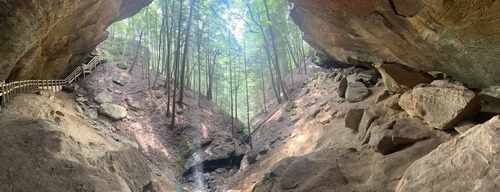
A peaceful Hocking Hills outing begins before the hike, with time to settle into the woods at camp. For travelers staying at Trothwood Forest, the route to Hemlock Bridge and Whispering Cave can become more than a quick sightseeing stop. It can be the centerpiece of a slower itinerary: wake among trees, walk a private trail, enjoy breakfast beside the fire, then head toward one of the area’s more distinctive trail experiences.
This order matters. A quiet basecamp allows the nervous system to downshift before the day’s more active miles begin. Instead of returning to a crowded lodging area after the hike, visitors can finish the morning by coming back to their own wooded site, where a hammock, fire ring, and natural surroundings are already waiting.
1. Let the Quiet Start at Camp
Trothwood Forest occupies more than 43 wooded acres near McArthur and the Hocking Hills region. The property is intentionally minimally developed, with well-spaced, privacy-focused campsites rather than a dense campground layout. That setting creates room for a gradual start to the day.
A dawn routine might include:
- A short walk along the property’s natural trails
- Listening for songbirds, rustling leaves, and distant wildlife
- Preparing ordinary camp coffee over the fire
- Reading in a hammock while the woods brighten
- Allowing children or dogs to explore at an unhurried pace
- Packing lunch and water without rushing toward the next destination

Early morning is often the most sensory-rich part of a woodland stay. Cooler air can make breathing feel easier, while low-angle sunlight reveals texture in tree bark, grasses, and leaf litter. The absence of heavy traffic and nearby campground activity may also make subtle sounds more noticeable.
From a stress-physiology perspective, this kind of transition can be useful. Stress is associated with activation of the sympathetic nervous system and the hypothalamic-pituitary-adrenal axis. A slower morning, familiar outdoor routines, and exposure to natural sounds may support a shift toward parasympathetic activity. The “rest and digest” side of the autonomic nervous system. Responses can vary, but beginning the day with fewer demands may help visitors feel more prepared for a moderate trail.
The goal is not to turn camping into a strict wellness program. There is still room for pancakes, muddy shoes, playful dogs, and the pleasant disorder of getting ready outdoors. The benefit comes from having choices. Campers can linger, or they can begin the outing once the forest has had time to wake.
2. Make Hemlock Bridge the First Scenic Payoff
After breakfast, the first destination is Hemlock Bridge, reached through the Hocking Hills State Park trail system near the Old Man’s Cave area. The trail is known for its wooded ravine, hemlock trees, and a swinging pedestrian bridge suspended over rugged terrain.
The bridge provides a satisfying objective without requiring an all-day commitment. It is a scenic payoff for campers who want to experience a memorable Hocking Hills feature while preserving time for solitude at camp.
The structure is often described as roughly 160 feet long and crosses a narrow wooded gorge. From the bridge, hikers can look into the ravine below and observe how the surrounding hemlocks shape the atmosphere. The setting feels adventurous, but the route remains compact enough to pair with Whispering Cave in the same morning.
The approach includes moderate rocky sections, inclines, declines, stairs, and boardwalks. Conditions can change with rain, fallen leaves, and seasonal maintenance. Supportive footwear and a steady pace are appropriate, particularly for visitors carrying children’s gear or traveling with a dog.
The bridge itself is part of the experience, but it is not the only reason to slow down. A quiet pause near the crossing can reveal several layers of sound:
- Wind moving through evergreen branches
- Water or damp ground in the ravine
- Footsteps shifting across rock and packed soil
- Birds calling from opposite sides of the gorge
- The subtle movement of the bridge beneath passing hikers
These details help distinguish the trail from a simple viewpoint stop. Hemlock Bridge is active enough to feel exciting, yet surrounded by enough woodland to maintain a sense of separation.
3. Pair the Bridge with Whispering Cave
The most efficient morning itinerary combines Hemlock Bridge with the Whispering Cave spur. According to local trail information, hikers begin on Hemlock Bridge Trail, reach a fork after approximately 0.6 miles, and can take the roughly 0.2-mile spur toward the cave. The short route is still more rugged than its distance suggests because of elevation changes and uneven terrain.
Whispering Cave is a broad sandstone recess beneath a substantial overhang. A seasonal waterfall can fall from the cliff above, with the strongest flow typically appearing after periods of rain. During drier weather, the waterfall may be reduced or absent, but the scale of the amphitheater remains the main attraction.

The cave’s name reflects its acoustics. A large sandstone amphitheater can reflect sound from its curved or angled rock surfaces. When background noise is low, a soft voice may travel across the recess and return as a faint echo. The effect is not necessarily a supernatural phenomenon; it is more consistent with the geometry and hardness of the sandstone, which can redirect sound waves more effectively than soil or dense vegetation.
Visitors can test the acoustics respectfully by speaking in a low voice rather than shouting. This preserves the atmosphere for other hikers and makes the contrast easier to notice. A whisper may carry farther than expected because:
- The overhang creates a partially enclosed acoustic space.
- Sandstone surfaces reflect more sound than soft forest floor.
- The broad recess allows sound to travel across open air.
- Reduced background noise makes faint reflections easier to hear.
The cave also offers a natural pause point. Hikers may sit beneath the overhang, examine honeycomb weathering in the rock, or watch for water descending after rain. The cooler, shaded environment can feel restorative after the climb and descent.
For those seeking a longer outing, the Hemlock Bridge Trail connects with routes toward Old Man’s Cave and Cedar Falls. However, a short Hemlock Bridge–Whispering Cave combination is often enough for a relaxed morning. It leaves room for the return journey, lunch, and an afternoon spent at camp rather than turning the day into a race between trailheads.
Practical Information for the Morning Walk
- Getting there: From the Old Man’s Cave area, follow Ohio Route 664 and look for the Hocking Hills State Park cabins or lodge-area entrance associated with the Whispering Cave trailhead. Confirm current parking and access information before departure.
- Trail length: The Hemlock Bridge section is approximately 1 mile, with the Whispering Cave spur adding about 0.2 mile each way from the junction. Total mileage depends on the exact turnaround point and route taken.
- Difficulty: Moderate, with rocky sections, stairs, boardwalks, and noticeable elevation changes.
- Bridge: A suspended or swinging pedestrian bridge spanning a wooded ravine, commonly described as approximately 160 feet long.
- Waterfall: Seasonal and generally most impressive after recent rainfall.
- Dogs: The trail is identified by local tourism sources as pet friendly. Dogs should remain under control, especially near stairs, bridge approaches, steep edges, and other hikers.
- Planning: Carry water, allow extra time for wet rock, and check official park notices for closures or changing conditions. The Whispering Cave and Hemlock Bridge trail information provides an additional reference.
4. Close the Loop Back at Camp
The return to Trothwood Forest is part of the itinerary, not merely the end of it. After a morning of inclines, rocky footing, and sensory stimulation, campers can shift back into a quieter rhythm without entering a busy lodging district.
Firewood is available at the property, making it possible to end the afternoon with a simple fire, a warm meal, or time in a hammock. Dogs can settle beside their people, and families can let the day become less scheduled. Visitors who prefer a more reflective pace may spend a few minutes noticing their breathing or listening to the forest rather than immediately reaching for a phone.

As evening arrives, the minimally developed setting can also support dark-sky enjoyment. The property’s wooded surroundings reduce the visual clutter associated with dense commercial areas, although cloud cover, moonlight, and nearby light sources will affect what becomes visible. A clear night may reveal stars between the branches, while an overcast evening offers its own quieter form of darkness.
Resting well after the hike may make the next day’s trail feel longer in the best sense: more time to notice the landscape, fewer demands to hurry, and enough energy to explore at a comfortable pace. Trothwood Forest’s affordable, private sites are designed for individual travelers, families, small groups, and motorcycle campers who want a natural base for exploring the region. A rentable cabin is also planned for guests who want the setting without a traditional camping setup.
The Trail Can Be the Encore
The usual Hocking Hills advice is to hike Whispering Cave first and then book quiet lodging afterward. A slower approach reverses the order.
Book the quiet campsite first. Begin at Trothwood Forest, where 43-plus wooded acres, spaced-out sites, firewood, dog-friendly camping, and minimally developed surroundings create a calmer starting point. Then let Hemlock Bridge and Whispering Cave become the encore: a moderate morning walk, a suspended bridge over a wooded ravine, sandstone acoustics, and a seasonal waterfall waiting after the rain.
For availability and current site options, visit the Trothwood Forest camping information page or check booking availability. The quiet does not have to wait until after the hike. It can be where the trip begins.