
The Best Ohio Stargazing Spots for Your Next Camping Trip (Dark-Sky Guide)

Ohio’s best camping stargazing experiences usually come from combining a darker rural setting with comfortable access to the night sky. In southeastern Ohio, the wooded Appalachian landscape, lower population density, and distance from major metropolitan areas can provide noticeably better views of the Milky Way, planets, constellations, and meteor showers than many city or suburban backyards.
For campers planning a night beneath the stars, the Hocking Hills region offers several options: public astronomy facilities, dark-sky parks, state-park areas, and private wooded land where the sky becomes part of the camping experience.
What “Dark” Really Means for Ohio Campers
Astronomers commonly use the Bortle scale to describe nighttime sky brightness. It ranges from Class 1, representing exceptionally dark natural skies, to Class 9, representing the bright sky of a major city.
Most Ohio campers will encounter conditions somewhere between suburban and rural darkness:
- Bortle Class 5–6: Common around suburbs and small cities. The Moon, planets, and brighter stars remain easy to see, but the Milky Way may be faint or absent.
- Bortle Class 3–4: More typical of remote rural areas and parts of Appalachian Ohio. The Milky Way can become visible overhead, with greater detail and more stars near the zenith.
- Bortle Class 1–2: Extremely uncommon in Ohio and generally associated with more remote wilderness regions.
Exact conditions vary with weather, humidity, tree cover, nearby businesses, and the direction of distant city lights. However, rural Appalachian Ohio typically offers darker skies than the suburbs surrounding Columbus, Cleveland, Cincinnati, or other large population centers.
The reason is straightforward: artificial light scatters through the atmosphere. This creates skyglow, which raises the brightness of the night sky and reduces contrast between faint celestial objects and the background. A rural site does not eliminate all light pollution, but it can reduce enough of it to make additional stars, star clusters, and meteor trails visible.

At a private wooded property, the viewing experience also depends on the shape of the land. A site with a clearing, field edge, or opening between trees may offer a wider section of sky than a dense forest floor. This is one reason campers should consider both light pollution and the site’s actual sightlines when planning an overnight observation session.
When to Plan an Ohio Stargazing Camping Trip
Meteor showers give campers a practical reason to reserve a night outdoors. Their peak dates are predictable, although the number of visible meteors can vary with cloud cover, moonlight, and the observer’s location.
Perseids in August
The Perseid meteor shower is generally active from mid-July through late August and typically reaches its peak around August 12–13. The shower is associated with dust from Comet Swift-Tuttle and is known for producing bright, fast meteors.
The best viewing usually occurs:
- After midnight and before dawn
- Under clear skies with limited moonlight
- With an unobstructed view toward a broad section of the sky
- Away from white lights and vehicle headlights
The timeanddate Perseid guide provides annual peak information, moon conditions, and viewing guidance. August is also practical for camping because temperatures are generally more manageable than during winter meteor-shower events.
Geminids in December
The Geminid meteor shower generally occurs from early to mid-December, with a peak around December 13–14. Geminids often produce bright meteors and can be visible earlier in the evening than some other major showers.
A December stargazing trip requires more preparation:
- Insulated clothing and warm footwear
- A properly rated sleeping bag
- Hand warmers
- A thermos of hot coffee or another warm drink
- A chair or sleeping setup that allows extended sky viewing
The timeanddate Geminid guide can help campers compare annual peak dates and lunar conditions.
Autumn and Winter Constellations
Meteor showers are not required for a rewarding stargazing night. Autumn skies often feature Pegasus, Andromeda, Cassiopeia, and Perseus, while winter brings prominent constellations such as Orion, Taurus, Gemini, and Canis Major.
Winter’s cold, dry air can sometimes produce excellent transparency, although cloud cover and comfort become more important. A clear November or January night may be ideal for campers who prefer slow observation over a single headline event.
Where to Stargaze: Public Parks and Private Wooded Land
Ohio offers both formal astronomy destinations and less structured rural viewing areas. Each serves a different purpose.
Observatory Park in Montville
Observatory Park in Geauga County is a certified Silver Tier International Dark Sky Park. The 1,100-acre park includes trails, astronomy facilities, public programs, and the Nassau Astronomical Station.
It is a strong choice for visitors who want:
- Organized astronomy programs
- A public observatory and large telescope
- Educational exhibits
- Designated areas designed with night-sky protection in mind
The park uses downward-facing red lighting in some areas and publishes program schedules and observing information. Visitors should verify hours, event requirements, and seasonal access before traveling.
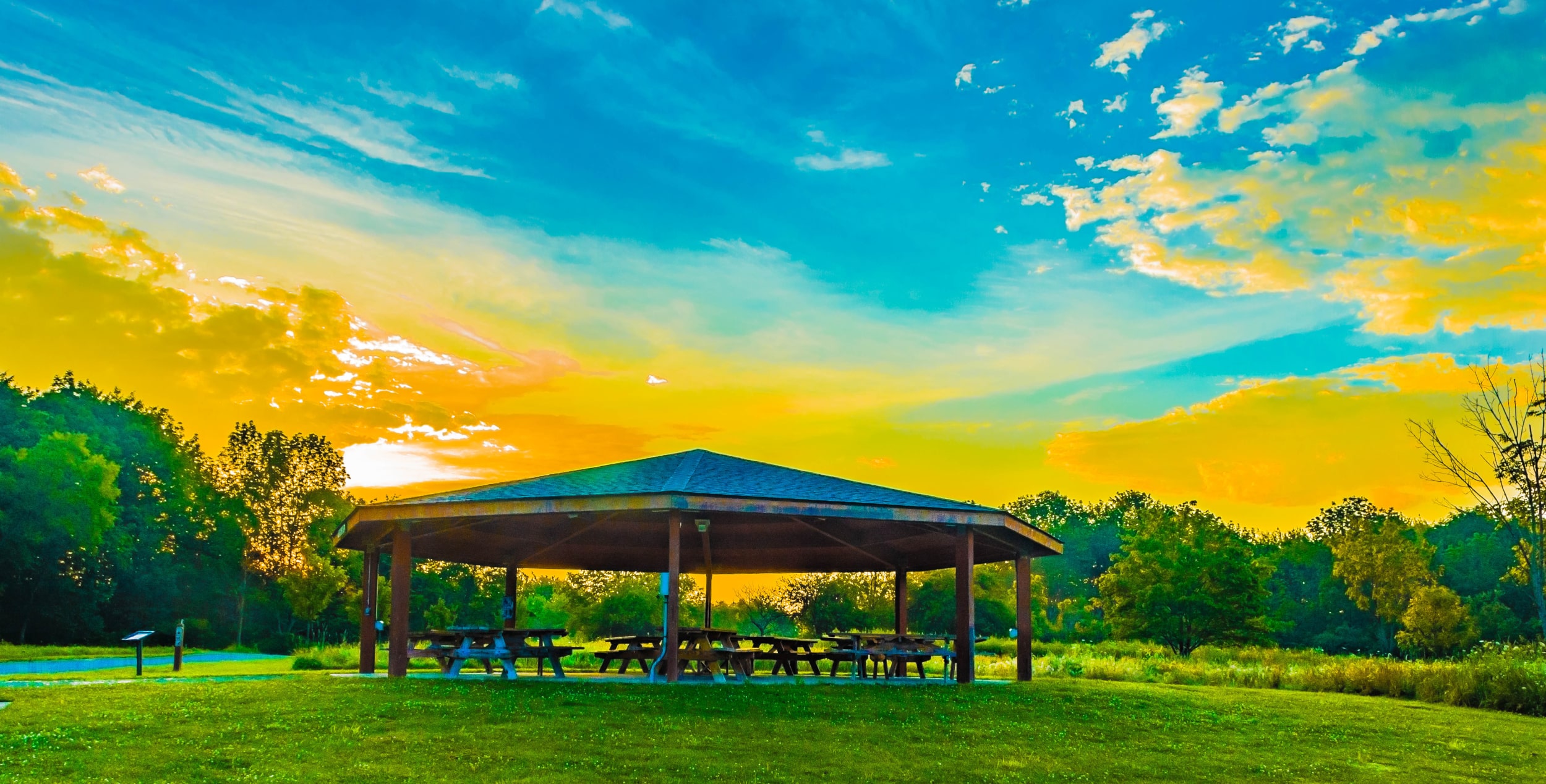
Fry Family Park in Stark County
Fry Family Park is another important Ohio night-sky destination. It is managed by Stark Parks and has been certified as an Urban Night Sky Place by DarkSky International.
That designation is different from a traditional Dark Sky Park, but the goal is similar: reduce unnecessary artificial light and preserve better nighttime visibility. The park identifies specific viewing areas and schedules certain evenings when shelter-area lights are turned off for stargazing.
Because Fry Family Park is a public destination with established rules, visitors should check current access policies. Red-light-only flashlights, limited screen use, and quiet behavior may be required during astronomy events.
John Bryan State Park and the Hocking Hills Region
The area around John Bryan State Park can provide scenic opportunities for casual stargazing, although it should not be confused with a currently certified International Dark Sky location. Conditions can vary by trail, parking area, nearby development, and local restrictions.
In the Hocking Hills region, the John Glenn Astronomy Park is a particularly useful public astronomy resource. It offers scheduled programs and a purpose-built setting for learning about the night sky. It can be paired with camping in the broader Hocking Hills area, subject to current program and reservation information.
Private Camping at Trothwood Forest
A public astronomy park can provide equipment and instruction. A private campsite offers something different: time, quiet, and the ability to step outside the tent whenever the sky clears.
Trothwood Forest includes more than 43 wooded acres near McArthur and Hocking Hills, Ohio. The land is minimally developed, and its well-spaced, privacy-focused campsites are designed to avoid the crowded feeling common at conventional campgrounds.
Depending on site availability and conditions, campers may be able to use natural openings, field edges, or breaks between trees for wider sky views. A private setting also makes it easier to settle into a slower rhythm:
- Watch the sky while sitting near the campsite
- Listen for frogs, insects, and nighttime wildlife
- Keep conversations low after quiet hours
- Let eyes gradually adapt without nearby campground glare
- Combine stargazing with hiking, meditation, or simply resting outdoors
Stargazing Etiquette and Light Discipline
Dark-sky etiquette protects both the observing experience and the safety of fellow campers. Human eyes can require approximately 20–30 minutes to reach stronger dark adaptation, while a brief burst of white light can reduce that sensitivity quickly.
Useful practices include:
- Use a headlamp or flashlight with a dim red-light mode.
- Aim the light toward the ground rather than toward people or the sky.
- Keep phones face-down or use the lowest practical screen brightness.
- Disable camera flash and unnecessary notifications.
- Avoid shining vehicle headlights into campsites.
- Arrive before full darkness when possible.
- Follow posted quiet hours and property rules.
- Keep fires controlled and use only approved firewood.
Red light is not a substitute for safe navigation. If brighter light is required to address a hazard, safety should take priority. The goal is to use the least intrusive lighting necessary.
What to Bring for a Comfortable Stargazing Night
A successful observing session depends as much on comfort as equipment. Astronomy often involves remaining still for long periods, so basic camping gear can make a significant difference.
Recommended items include:
- A reclining camp chair or supportive outdoor seat
- Warm layers, even during summer
- Blankets or a sleeping bag
- A thermos of ordinary camp coffee, tea, or water
- Binoculars for scanning the Moon, star clusters, and bright celestial objects
- A red-light headlamp
- A star chart or astronomy app used briefly and discreetly
- Insect repellent during warmer months
- A small table for charts and personal items
A telescope is optional. Binoculars are easier to transport and can reveal lunar craters, the Pleiades, the Andromeda Galaxy under suitable conditions, and many star clusters.

Plan a Private Hocking Hills Stargazing Trip
Ohio’s best stargazing spots range from certified public dark-sky locations to quiet private land in the Appalachian hills. Public parks provide astronomy programs and specialized facilities, while a private campsite can make the night feel unhurried and personal.
Trothwood Forest offers affordable, well-spaced camping on minimally developed natural land near Hocking Hills. Dogs are welcome, firewood is available, motorcycle camping is supported, and a rentable cabin is coming soon for guests who prefer more shelter. A developing fruit orchard and future relaxation retreats will add to the property’s outdoor appeal.
Campers can review available sites or check current availability before planning a meteor-shower weekend. With a chair, warm layers, a darkened campsite, and patience, the Ohio night sky can become one of the most memorable parts of the trip.